Tempco Blog articles

Heat recovery in industrial plants

Many industrial sectors need thermoregulation of manufacturing processes and heat dissipation of waste thermal energy, wherever working machines are involved, employing mechanical work in order to obtain motor drive, hydraulic pressure or compressed air, producing thermal energy. The produced heat has to be dissipated avoiding over-heating of machinery, that can compromise functionality and duration. But while the waste heat is dissipated, at the same time it is possible to recover it using simple thermal recovery machines, that can capitalize on it using waste heat for other functions, such as ambient or sanitary water heating, highly increasing plant’s energetic efficiency and minimizing energy waste.

Hydraulic units, endothermic engines and air compressors are examples of working machines producing high amounts of thermal energy: for example, endothermic engines employs hydraulic oil to achieve the right lubrication of moving parts avoiding friction, and the oil gathers heat draining it from machinery and mechanical components, overheated by the mechanical movements or due to thermal processes happening during productive cycle. Motor oil also provides machinery cooling indeed, and this is a vital function to avoid deformations in mechanical components, but has to be cooled in turn releasing the stored heat, in order to maintain right physical lubricating properties to prevent wear and breaking. Also, there are industrial facilities needing a fine regulation of temperatures, to ensure high and constant quality levels, then requiring a careful process thermoregulation.

There are many industries producing high amounts of unexploited waste heat with high energetic potential, that can all obtain great advantages installing a heat recovery system: steel industry, cement factories, foundries, oil refineries, thermal treatments, glassworks, chemical industries, thermoelectrical centrals and power generation. These all are different kinds of high energetic content industries, where using heat recovery units can increase in value the waste heat in the same time it gets dissipated and drained, lowering primary combustible waste, costs and Co2 emissions.

Thanks to carefully engineered thermal machines, waste thermal energy can be indeed recovered, while dissipating it to protect manufacturing process and allowing the right maintenance of machinery working conditions, and this recovered energy can be used in accessory duties: gained and recovered heat can be employed for ambient heating, sanitary water heating, or for the pre-heating of fluids and raw materials, where required.

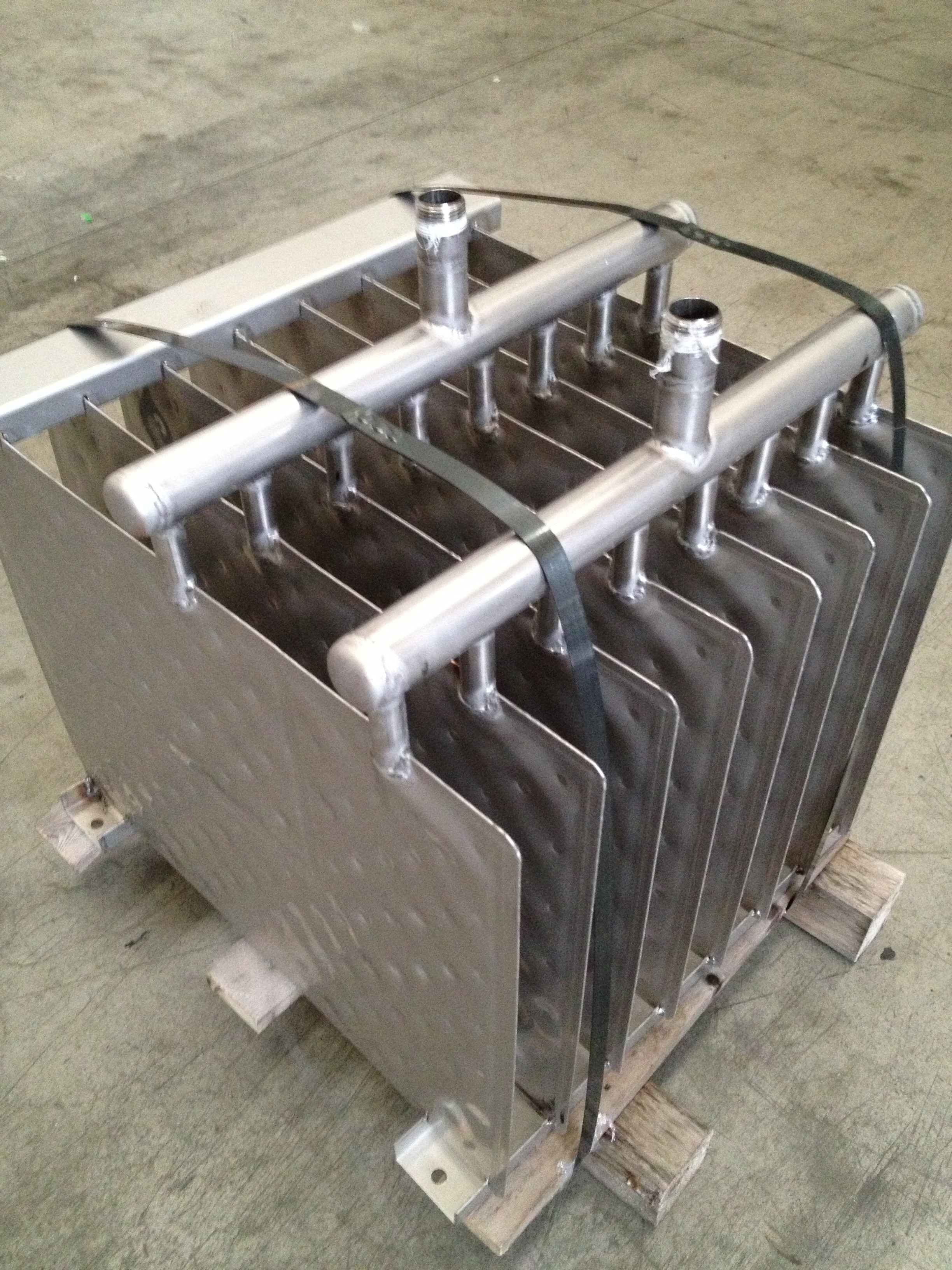
Thermal recovery is achieved with heat exchangers: a heat exchanger is a passive thermal machine, that works without additional combustible or additional energy neither. Heat exchangers accomplish heat transfer simply by thermal exchange between two fluids at different temperatures: the temperature gap triggers a natural heat passage, that continues until a temperature balance is reached.

That way, a heat exchanger achieves waste thermal energy dissipation in industrial plants, at the same time storing the dissipated heat in a working fluid: residual heat can be given to different kind of working fluids and then used for other purposes, as energy of third or fourth level. Thermal energy is then recovered and recycled, instead of being released in ambient external air: the results are lower emissions, a lowered environmental impact, and most of all lower energetic and primary combustible consumptions, that should be used to solve accessory purposes now achieved using the recovered heat. And, obviously, it all means lower costs and an increased energetic efficiency for the whole industrial process.

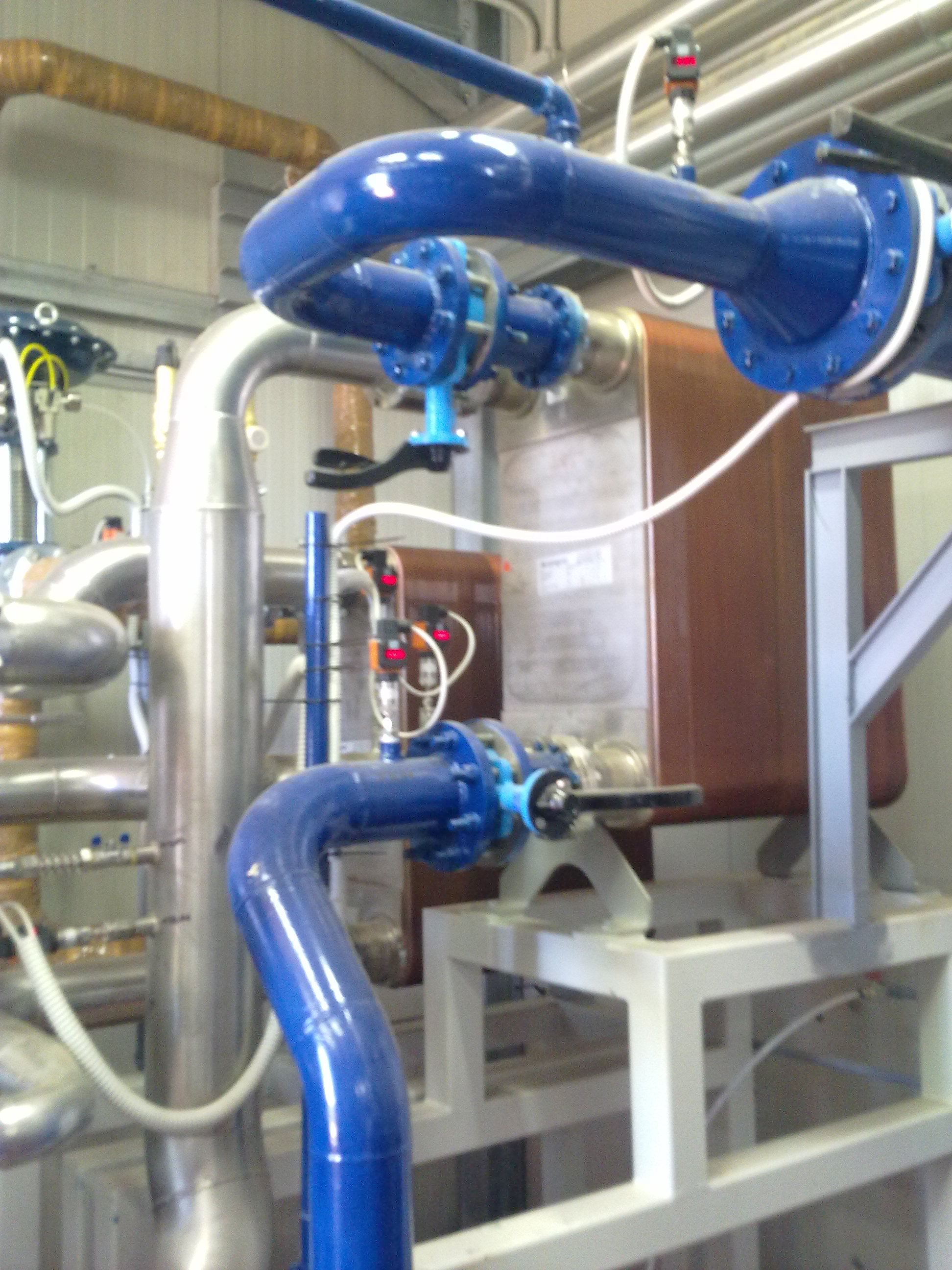
A heat recovery system is a stand-alone solution, compact and easy to install, economic and requiring quick maintenance, and is composed by:

  • Heat exchanger as thermal module
  • Frame support
  • Instrumentation kit (manometer, thermometer)
  • Thermostatic valve

Heat recovery modules can then be customized to fully answer any customer need, adding:

  • recycle pumps
  • temperature controller for thermoregulation
  • security valve and expansion tank

Customizing the heat recovery systems allows to serve all kind of industrial sectors and applications, adapting in dimensions, heat loads to be dissipated, temperatures and kind of fluids and products involved.

A careful design and engineering of the kind and dimension of the thermal system can lead to very high percentage of energy recovery, increasing energetic efficiency of the industrial plant. Using monitoring and controlling systems, such ad valves and measuring tools, a heat recovery system can also be used for the thermoregulation of working fluids and machinery equipments, whenever the kind of products or the type of production cycle require constant and defined temperatures, achieving consumptions efficiency and the maximum safety and quality levels.

There are several pre-assembled modules available on the market, such as the Tempco T-ENEPAC stand-alone modules, having the plus of very low maintenance needed and recovering heat with easy and quick project and installation, producing hot water to be employed for:

  • Ambient heating
  • Sanitary hot water
  • Pre-heating in production cycle

These are modules fully equipped with heat exchangers, in the suitable dimension, regulation system, temperature sensors and connecting pipes, and the whole system is contained in a frame support ready to be installed and easily connected to the plant. A bypass system for the recovery fluid is also normally supplied, in case the heat recovery is not required, for example during summer period for ambient heating, and in that case an alternate heat dissipation system is provided.

T-ENEPAC pre-assembled thermal modules for heat recovery of Tempco are produced in a standard line of solutions, with a wide range of customizing possibilities to answer any need and specific industrial and working machinery plant requirement.

Heat exchangers

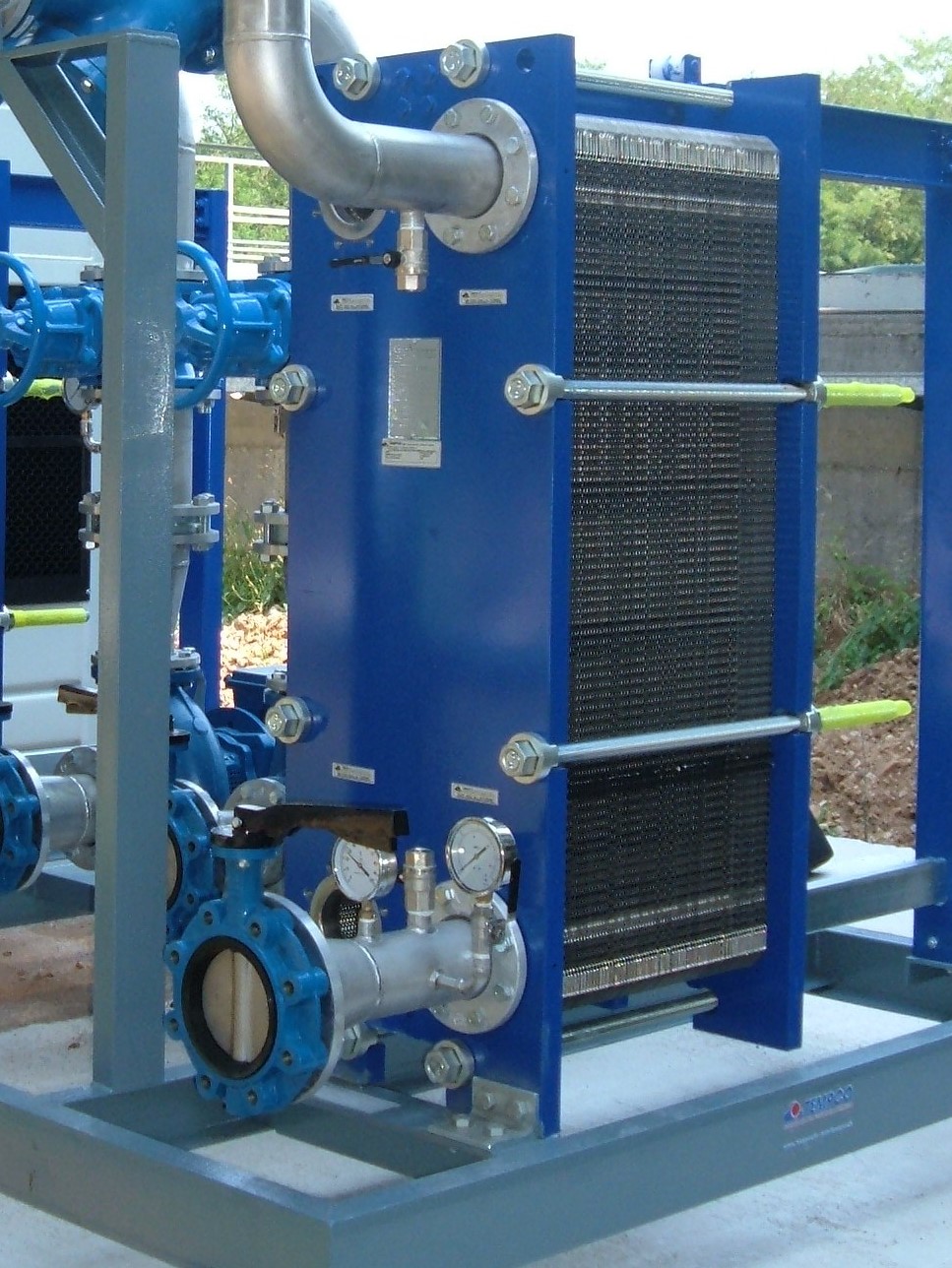
Plate heat exchangers

The heat exchanger is a device which is needed to transfer thermal energy (heat) between two liquids with different temperatures

There are many types of heat exchangers which vary depending on the different type of liquid used to transmit and exchange heat.
Heat exchangers are “passive” devices that do not generate heat. They simply transfer it.
There are mixing and surface heat exchangers: quite a few of the latter type are on the market and are classified depending on the building type.

Leggi »

The expansion vessel

When we talked about storage tanks in thermal plants we meant of course open tanks.

Storage tanks also function as “expansion vessels”. The expansion tank has a dual function: thermal and hydraulic.

From a thermal point of view its function is to allow water, which is an incompressible fluid, to expand or contract. In order for this to be possible it is necessary for the fluid to be in contact with a gas that can compensate for the expansions and contractions of the fluid.

There are three possible configurations:

  • open atmosphere vessel;
  • closed vessel, containing water and air (or other inert gas) without any for of separation (self-pressurization or pressurization with air or gas that is inserted from the outside);
  • closed vessel with a separating membrane between the water and an inert gas (nitrogen)

Leggi »

How does a cooling tower work and how much water does it use?

induced cooling tower

The evaporative cooler is a very simple device, which serves to cool water by direct exchange with air.

There are different types of evaporative towers:

  • induced, with suction fans
  • forced, using forced ventilation
  • counter flow, with countercurrent water and air flow
  • cross flow, that uses a crossing flow of water and air

in any case all of these machines work using the same concept.

The counter-flow type is the most widely used, whether it be forced or induced, because it presents greater functioning efficiency.

Leggi »

Heat exchanger calculation

recovery_2.jpg

The calculation of a heat exchanger, is all in all a fairly simple exercise. It involves applying a mathematical formula using a set of pre-established data and coefficients.

Obviously this is assuming we limit ourselves to the calculation of the exchange surface which is required for a certain type of thermal work.

A series of factors come into place to establish the actual size of a heat exchanger

  • construction type
  • limited project conditions
  • internal heat flow
  • turbulence
  • etc…

These factors determine the actual size of the exchanger and as a result they become the essence of the project.

It is not my intention here to dwell upon complex issues but I do wish to summarize some fundamental concepts regarding heat and its transmission to the basic dimensions of a heat exchanger.

The following are some excerpts from the document that can be easily downloaded.

Leggi »