Tempco Blog articles

Free flow plates in heat exchangers for wire drawing of plastics

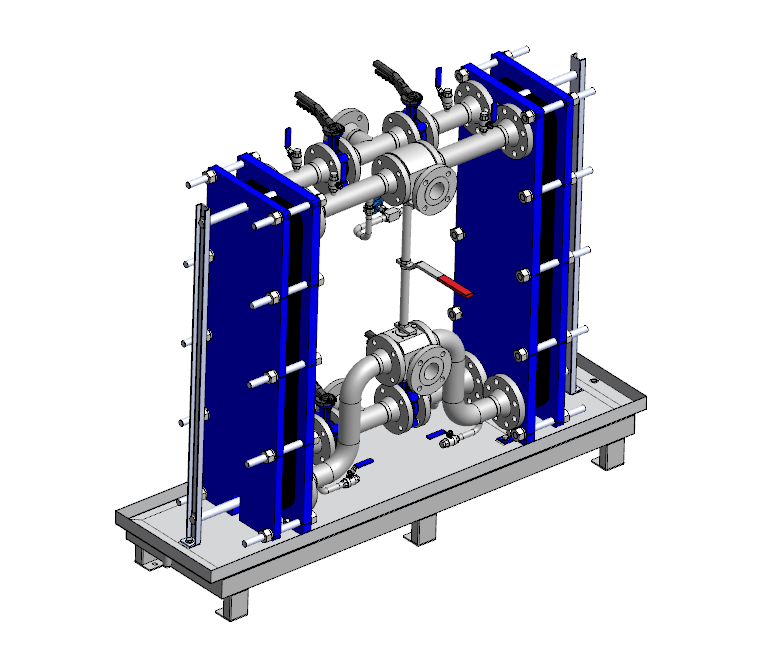
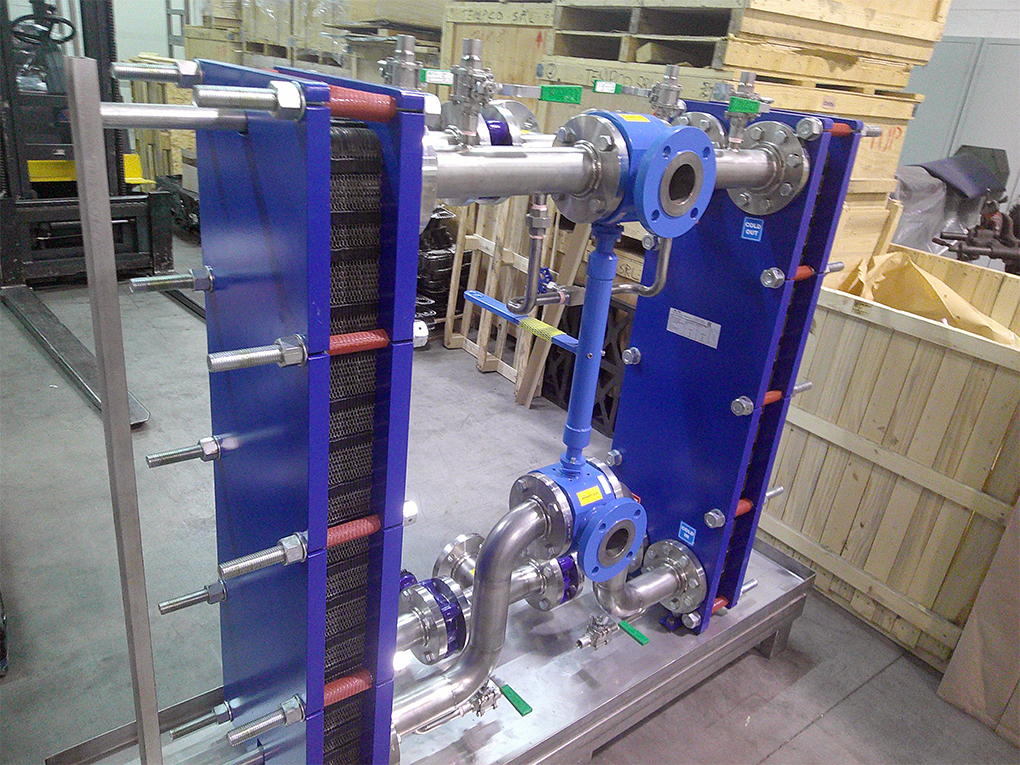
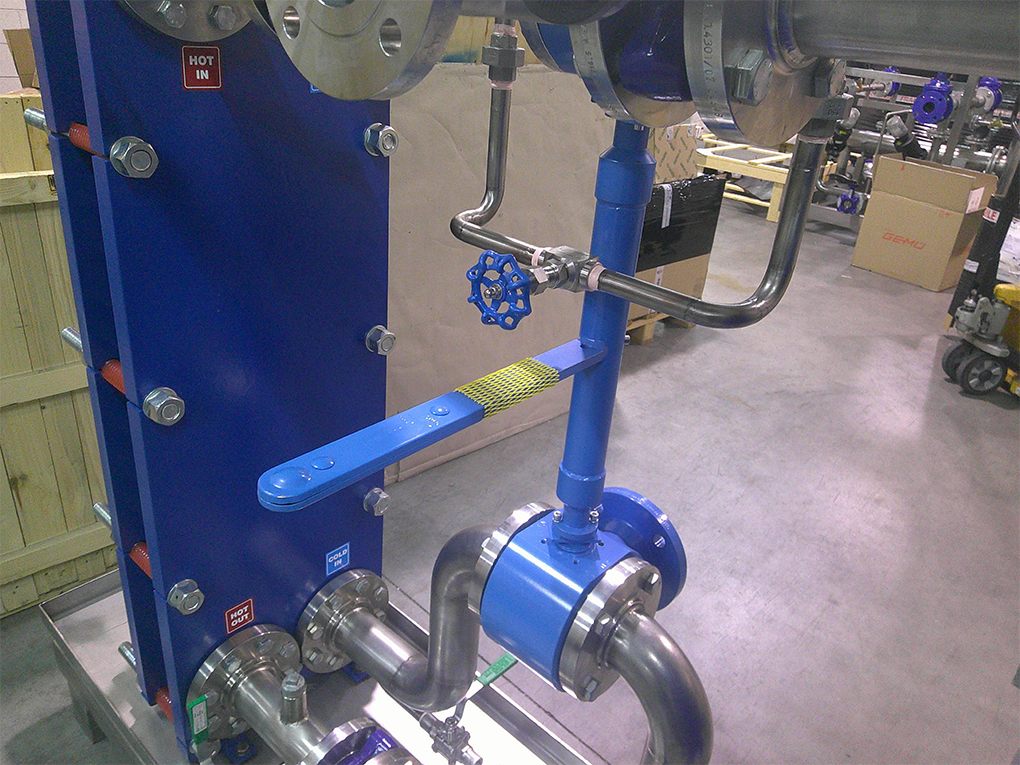
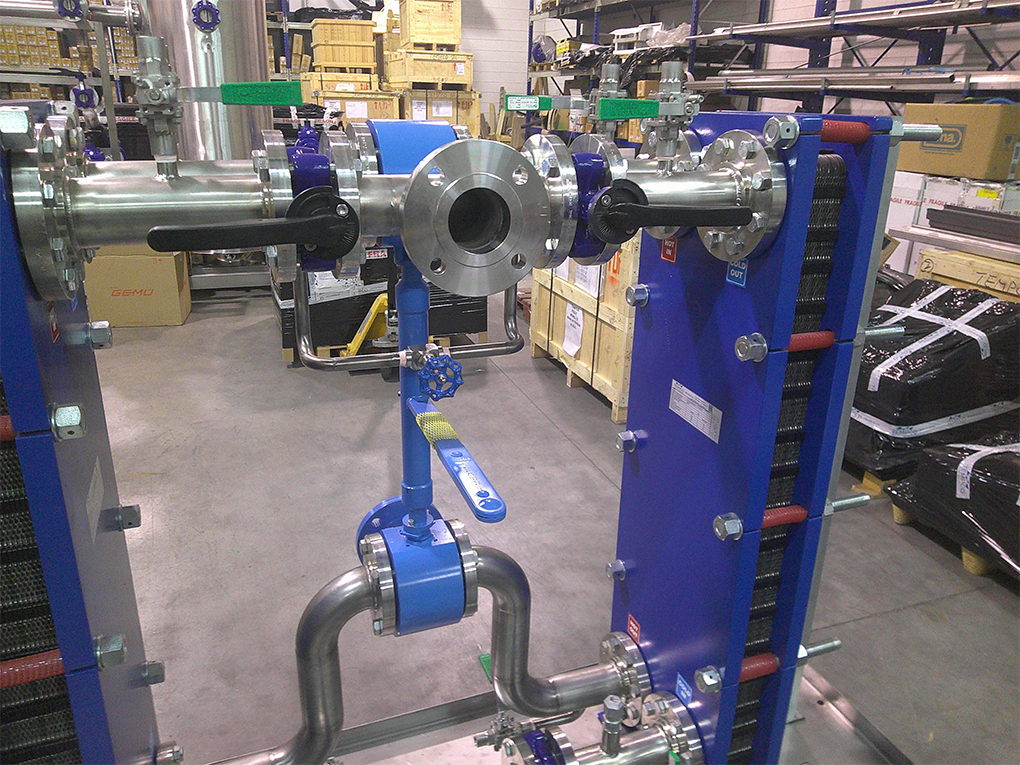
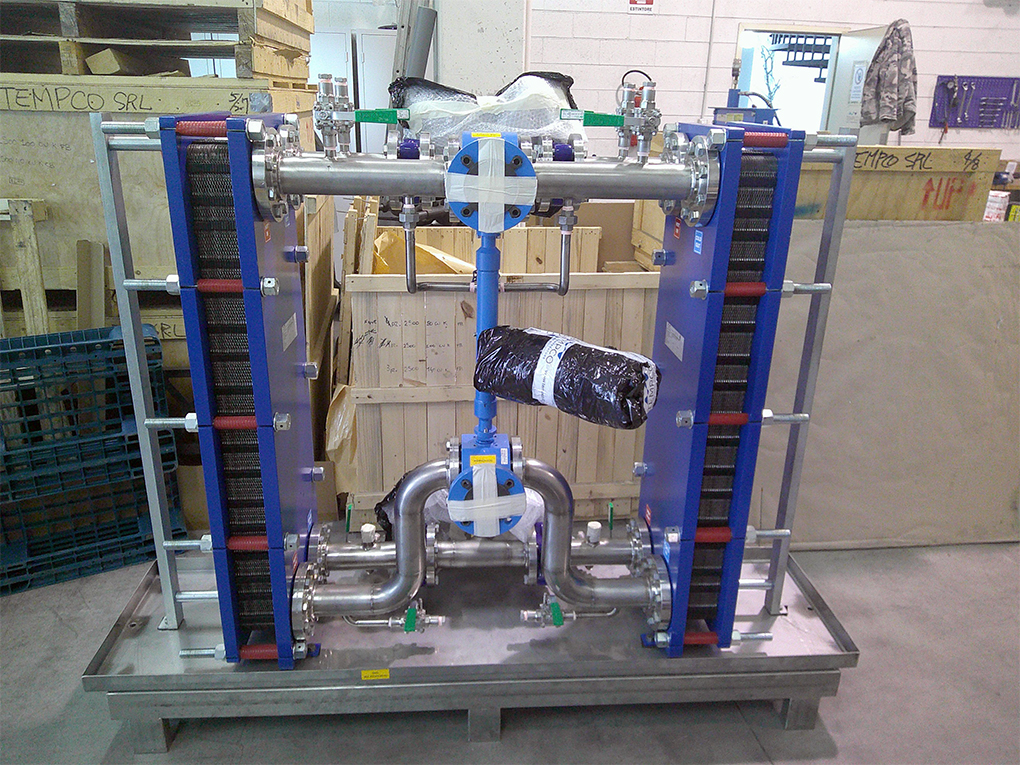
The plates showed in this new video on our Tempco YouTube channel are very particular plates for plate heat exchangers, characterized by very wide channels. These are called Free flow plates, indeed having large channels and having no contact points.

Usually, plate heat exchangers increase their thermal transfer efficiency when the number of contact points between the plates increases, thus increasing the turbulence rate of fluids. But these contact points also become spots for the settlement of dirt, when the exchangers work with dirty fluids rich in suspended particles.

Free flow plate heat exchangers were then born in order to avoid this problem. In Tempco we’ve recently supplied a couple of free flow exchangers with DN150 connections aimed at cooling water for die plates in wire drawing of plastic materials. In fact, during the wire drawing process, a plastic material wire comes out of the wire plate and gets collected in a tank containing cooling water. The plastic wire then proceeds to the cutting section, where plastic granules are produced.

Cooling water then becomes clearly full of plastic dusts and plastic chips. Using traditional plate heat exchangers in this particular application, the exchangers would become clogged in a very short time lapse.

Stay updated on the latest applications of thermal energy management by subscribing our monthly Tempco Newsletter – Solid Temperature.
Pharma lab thermostatation with MODBUS communication

Welcome back at September’s restart, let’s return on topic talking about Tempco’s thermoregulation solutions with a recent application we have realized for a laboratory serving the production in the pharma sector.

The solution consists in an integrated system for thermostatation of pharma products in a laboratory supplied as a plug & play monobloc skid unit. The unit covers a working temperature range from +10° C up to +120° C, with a chiller serving a PID thermoregulating unit, equipped with remote interface using MODBUS communication protocol.

Tempco termoregolazione laboratorio farmaceutico 1


To meet the particular requirements of the laboratory processes, a splitted solution has been chosen in order to allow the unit to make different sections independent and to achieve fully efficient diverse heating/cooling temperature ramps.

Tempco termoregolazione laboratorio farmaceutico 2

Tempco termoregolazione laboratorio farmaceutico 3

Tempco termoregolazione laboratorio farmaceutico 4

Tempco termoregolazione laboratorio farmaceutico 5

Stay updated on the latest applications of thermal energy management by subscribing our monthly Tempco Newsletter – Solid Temperature.
Good August and a Cool Summer 2023 from Tempco!

Tempco summer 2023

Dagli scambiatori di calore alla calura estiva, Tempco augura Buon Agosto e Buona Estate a tutti, ci rivediamo a Settembre!


Stay updated on the latest applications of thermal energy management by subscribing our monthly Tempco Newsletter – Solid Temperature.
Fouling factor, each type of exchanger has its own

The Fouling Factor is a subject that periodically comes back into the spotlight, a subject that we’ve indeed already treated in other videos in our Tempco YouTube channel and from the pages of this blog. Fouling Factor in plate heat exchangers is in fact a crucial element to determine the sizing of the exchanger upon the conditions of a certain application.

The occasion to go back on it was given by a recent experience for an application made for a customer, who requested a fouling factor with a value usually related to shell and tube exchangers. The results were utterly deadly, because sizing the exchanger using fouling factor values suitable for a shell and tube exchanger led to a slowdown of the speeds of fluids inside the exchanger and therefore to an increase of the fouling, drastically reducing the efficiency of the thermal transfer rate.

The solution to the problem has been to remove 30% of the plates from the exchanger, getting back to a fouling factor value more suitable for a plate heat exchanger.

Stay updated on the latest applications of thermal energy management by subscribing our monthly Tempco Newsletter – Solid Temperature.
Thermoregulation in green chemistry for food sector waste oils recycle

Recently we have developed a cooling and thermal transfer system aimed at oil thermostatation in a reactor for an Italian startup operating in the waste oils recovery from the food sector.

The customer is operating in the research within the Green Chemistry field, for the synthesis of ester products derived from waste oils, based on circular economy principles and the use of renewables raw materials. The oils which are treated and transformed to obtain innovative solvent products for the packaging, printing and cosmetics industries, are part of the so-called third generation biomasses that don’t require the use of products directly coming from food crops nor subtract soil and resources from the agriculture chain.

Tempco centralina termoregolazione recupero oli esausti Green Chemistry

The equipment supplied by Tempco for this particular and innovative application includes:


Tempco centralina termoregolazione recupero oli esausti Green Chemistry centralina unit
Tempco centralina termoregolazione recupero oli esausti Green Chemistry centralina unità
Tempco centralina termoregolazione recupero oli esausti Green Chemistry centralina 2
Tempco centralina termoregolazione recupero oli esausti Green Chemistry centralina

Stay updated on the latest applications of thermal energy management by subscribing our monthly Tempco Newsletter – Solid Temperature.
Energy saving in latex objects production

In a new video on out Tempco Youtube channel, we talk a further more about a very interesting application for a vulcanization machine that was designed and manufactured by HUREX Suisse in Locarno in collaboration with Tempco and with Giovanni Caschetto, an engineer with a wide experience in the latex sector.

This is in fact an application for latex vulcanization. For the production of mattresses, pillows or any kind of object made in latex, molds are employed to give the desired shape to the product, and then these molds are heated inside autoclaves using steam.

Liquid latex, or the blend containing liquid latex, gets injected inside the molds, and the mold gets heated in order to achieve the expansion of the blend and to obtain the finished object.
Usually, the process was carried inside autoclaves injecting steam, in order to heat the mold. The interesting solution that we have deployed employes instead a warm fluid circulating within the mold, directly heating the product. In a similar way to what happens in the molding of plastic materials.

This solution is indeed very much interesting because it allows to achieve an energy saving of about 50% in terms of thermal power required to heat the mold and accomplish the vulcanization process of the final latex product.


Stay updated on the latest applications of thermal energy management by subscribing our monthly Tempco Newsletter – Solid Temperature.

Water cooling solution for power electronics

For a manufacturer of power switch rectifiers, operating in the galvanic treatment sector, in Tempco we have developed a special cooling module using water (yes, exactly water) for power electronics components.

This is a kind of application for which we have grown a consolidated and extensive know-how, thanks to recent solutions realized for other customers in the nautical sector and the power industry.

Tempco raffreddamento ad acqua elettronica di potenza

For this important customer we have therefore engineered a compact and integrated module, aimed at being installed inside its towers, exactly as if it was a rack module. The solution is completely autonomous and complete with pumping system, thermal transfer and temperature regulation. The whole project has been realized thanks to an in depth 3D study of the internal layout and arrangement of all components, in order to reduce as much as possible the size of the system to fit it into the existing equipment of the customer.

Tempco raffreddamento ad acqua elettronica di potenza power rectifiers

Stay updated on the latest applications of thermal energy management by subscribing our monthly Tempco Newsletter – Solid Temperature.
Electrical heating in mono fluid thermoregulation with interactive 3D model

The video below showcases the working circuit of the fluid in a mono fluid thermoregulation application with electrical heating in our Tempco TREG thermoregulation units. The video animation clearly shows the inlet of water to be heated and the outlet flow of heated water both from the top of the unit.

TREG HCE are skid package thermoregulating units for water, diathermic oil and other fluids heating using electrical heaters, thanks to an array of electrical heaters and/or electrical heaters heat exchangers.

The dedicated page of the Tempco website also provides users, thanks to the Sketchfab technology that allows to create 3D assets that can be configured and animated in real-time, the possibility to freely explore our thermoregulation units in a totally interactive mode, in order to better and simply understand the functioning of the units, by rotating at 360° and zooming in with a surprising level of detail on the construction of the TREGs thanks to 3D models. It’s also possible to select both the visualization of the cooling or heating cycle, based on the temperature regulation needs of the production process of the customer.


Centraline TREG HCE termoregolazione monofluido riscaldamento elettrico asset 3D

Centraline TREG HCE termoregolazione monofluido riscaldamento elettrico asset 3D interattivo

Centraline TREG HCE termoregolazione monofluido riscaldamento elettrico asset 3D zoom

Stay updated on the latest applications of thermal energy management by subscribing our monthly Tempco Newsletter – Solid Temperature.

FULL INOX brazed plate exchangers in pharma applications

We’re finally glad to announce that Tempco has widened its heat exchangers range with the introduction of new FULL INOX brazed plate exchangers, therefore with a full stainless steel construction with no filler material.

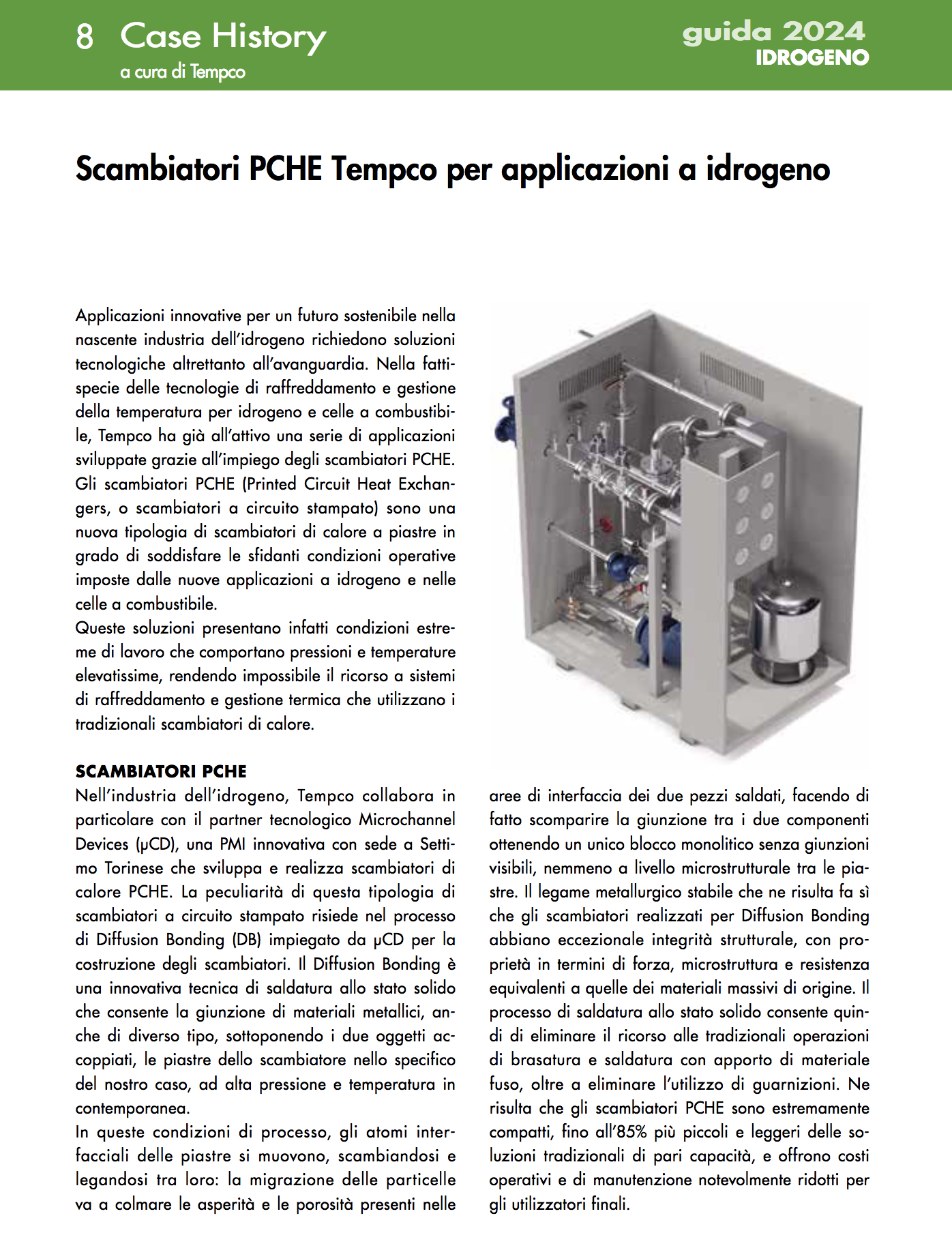
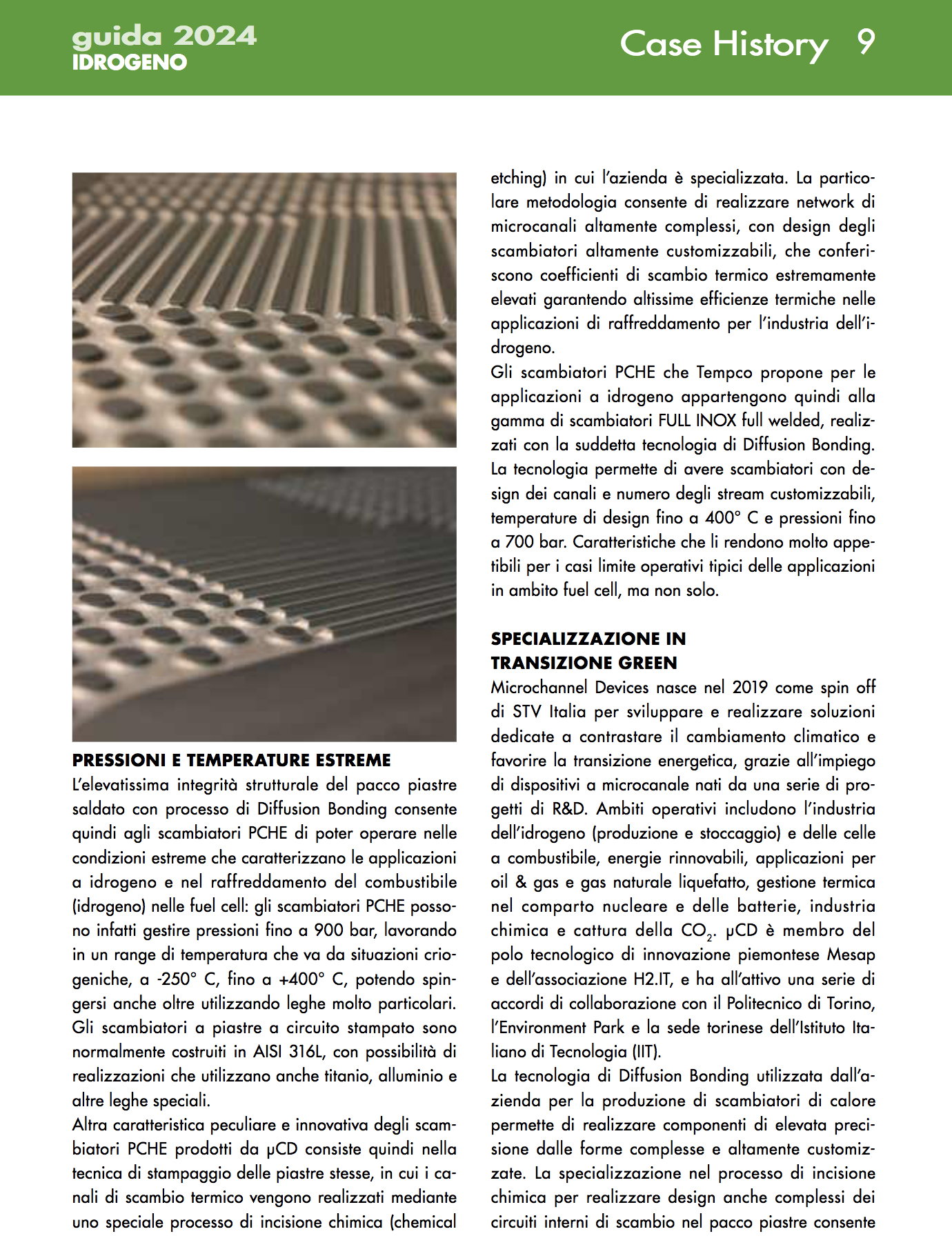
These special brazed plate exchangers are obtained using a particular welding technology called Diffusion bonding or diffusion welding, which is a solid-state welding technique used in metalworking capable of joining similar and dissimilar metals, thanks to a process employing in conjunction high temperature and high pressure. It operates on the principle of solid-state diffusion, wherein the atoms of two solid, metallic surfaces intersperse themselves over time.

Despite all the sizes are not yet available, however we’re able to produce with this technology exchangers with connections from 1/2” and 2”. This special technology is therefore very interesting and we’re actually providing it to supply come thermoregulating units for the pharma sector.

Tempco saldobrasati per full inox

In particular, an important and renowned customer that manufacturers reactors and filtration systems has decided to rely on Tempco for the realization of TCUs (thermal control units), which are our TREG units, thanks to the expertise that we have in this kind of applications that we can offer.

These thermoregulating units will be equipped with FULL INOX brazed plate exchangers, and of course with an continuous support in terms of maximum standardization.

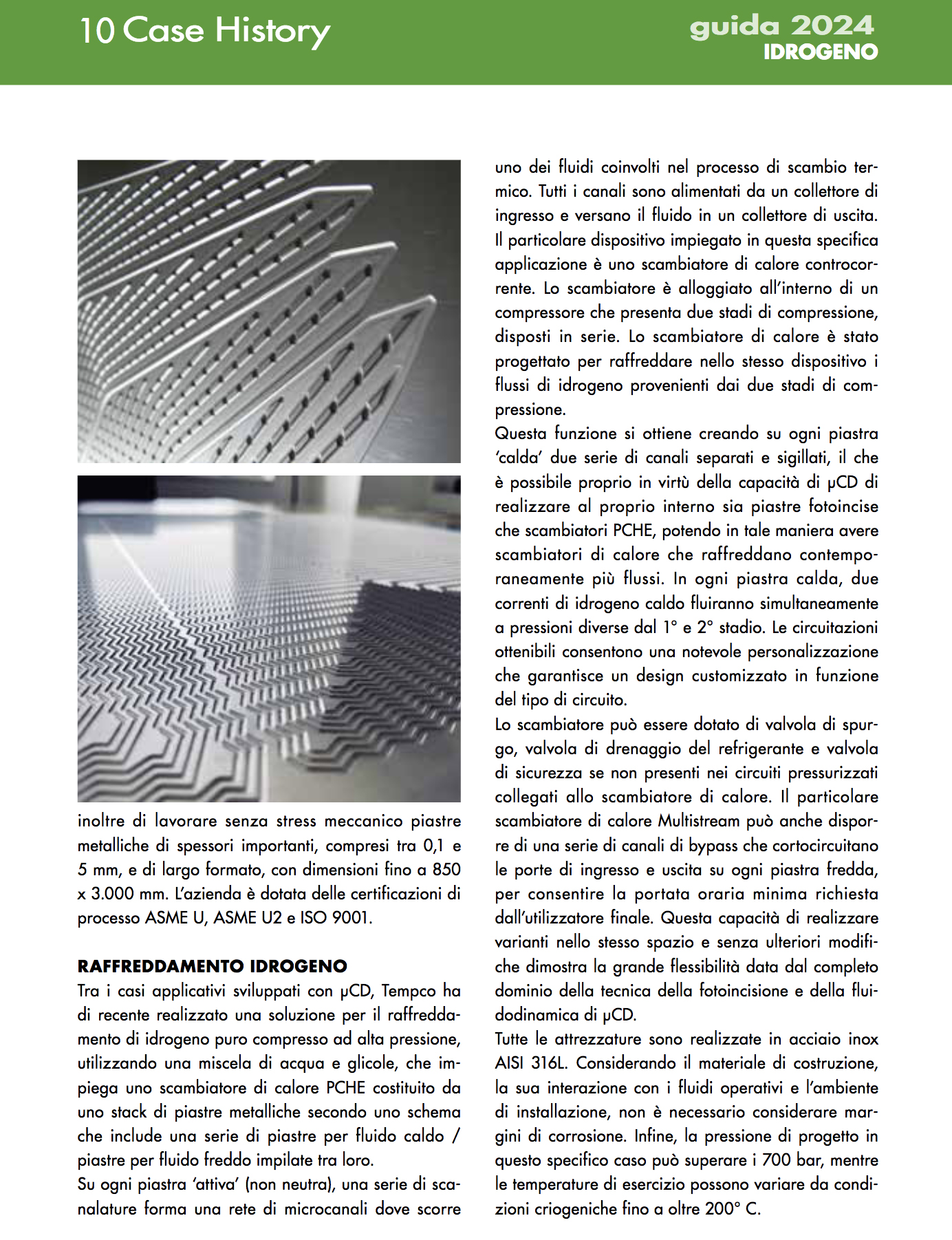
Special components for CO2 bringing sustainability in refrigeration

Carbon dioxide and CO2 are very often the focus of discussions about the hole in the ozone layer as well as for other reasons. But maybe not everyone knows that CO2 is also an excellent gas that can substitute traditional gases employed as refrigerants, such as the classic freon which is correctly considered as a cause of the hole in the ozone layer.

Recently, the sector of refrigeration has been intensely involved in the research of alternative gases in order to limit the greenhouse effect. An example is ammonia, that however has important negative side effects in terms of toxicity and flammability. The most recent born is then the CO2.

There are in fact more and more cooling, refrigeration and conditioning plants on the market that are using CO2 in their thermal cycle, carbon dioxide. CO2 is a natural gas, with therefore a huge green aspect. But there are clearly also some complexities and implications, related to the fact that CO2 has state transitions are very high pressure levels, meaning 100, 120, 130 and up to 140 bars. And traditionally conceived refrigeration plants using freon work in the condensation phase at maximum pressure levels of 40-45 bars.

It means that the overall components and equipments usually employed in refrigeration plants must undergo an important technological upgrade in order to cope with CO2 working conditions applications. There are in fact already functioning plants using CO2 on the market, and therefore the suitable equipments already exist too, although maybe not covering the full range of power capacities. There is for example a quite wide range of compressors available for CO2 applications, even if not in all the sizes and power capacities.

Difficulties are instead related to connections, fittings and pipings, that must be able to cope with these high pressure working levels. But as well, working with high pressure levels also involves having high specific volumes, allowing for a reduction of the diameters of pipings.

Finally, another main aspect is related to thermal transfer, that requires to study special heat exchangers, in function of condensers and evaporators, able to work with the high pressure levels involved in CO2 applications. These exchangers can be brazed plate exchangers, employed as evaporators or condensers, or a thermal transfer array when using air heat exchangers. Anyway, these are ad hoc engineered equipments in order to work with CO2 at high pressure. A full range of CO2 heat exchangers is already available on the market, offering quite interesting power capacities, but clearly actually we’re still in a strong phase of study and engineering development.


Stay updated on the latest applications of thermal energy management by subscribing our monthly Tempco Newsletter – Solid Temperature.