
In data centers, the shift from air cooling to liquid cooling techniques offers significant advantages regarding energy savings and superior cooling efficiency. It enables increased computing density and, overall, improves the sustainability of large-scale high-performance computing infrastructures.
Today, the rapid and continuous rise in heat amounts from chips renders traditional air-conditioning systems inadequate. Tempco BPHE brazed plate heat exchangers—also available in an all-stainless-steel version—are the technological heart of this shift to liquid cooling; they act as a key technological enabler that brings sustainability to data centers by reducing PUE (Power Usage Effectiveness) while simultaneously allowing for increased rack density.
The superior performance of liquid cooling stems primarily from the fact that liquids are more efficient than air at transferring heat, allowing for more effective heat dissipation and lower energy consumption for the same amounts of heat removed. This makes it possible to reliably manage the higher power densities typical of AI and HPC applications—delivering high performance in a more eco-friendly manner. Furthermore, liquid cooling allows for highly targeted and precise cooling, as liquids are easier to direct toward specific components than air. The cooling ecosystem is completed by free-cooling systems and chillers located outside the data center; these dissipate the heat extracted from the servers and conveyed outdoors via the BPHE exchangers.
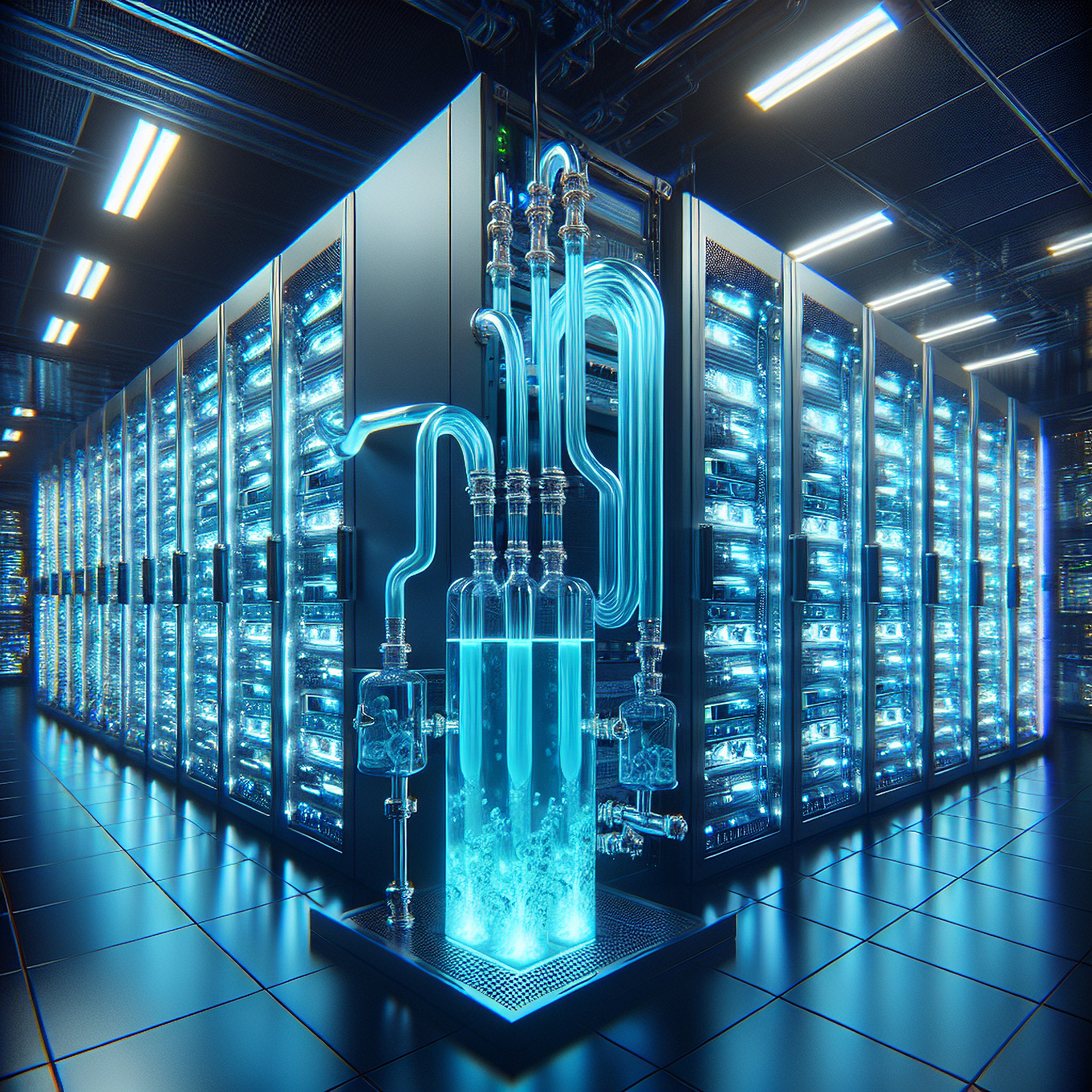
Tempco supplies brazed plate heat exchangers (BPHEs) for data center liquid cooling, offering models and versions suitable for every type of liquid cooling method, regardless of the system architecture. Their highly compact design allows for easy integration into the Coolant Distribution Units (CDUs) found in liquid cooling systems, thereby saving space within the installation. Tempco’s process expertise and capability to manufacture integrated solutions—such as complete skid systems—offer a further advantage to data center manufacturers and operators, enabling the creation of compact, comprehensive solutions that are easy to install and integrate into computing infrastructures.
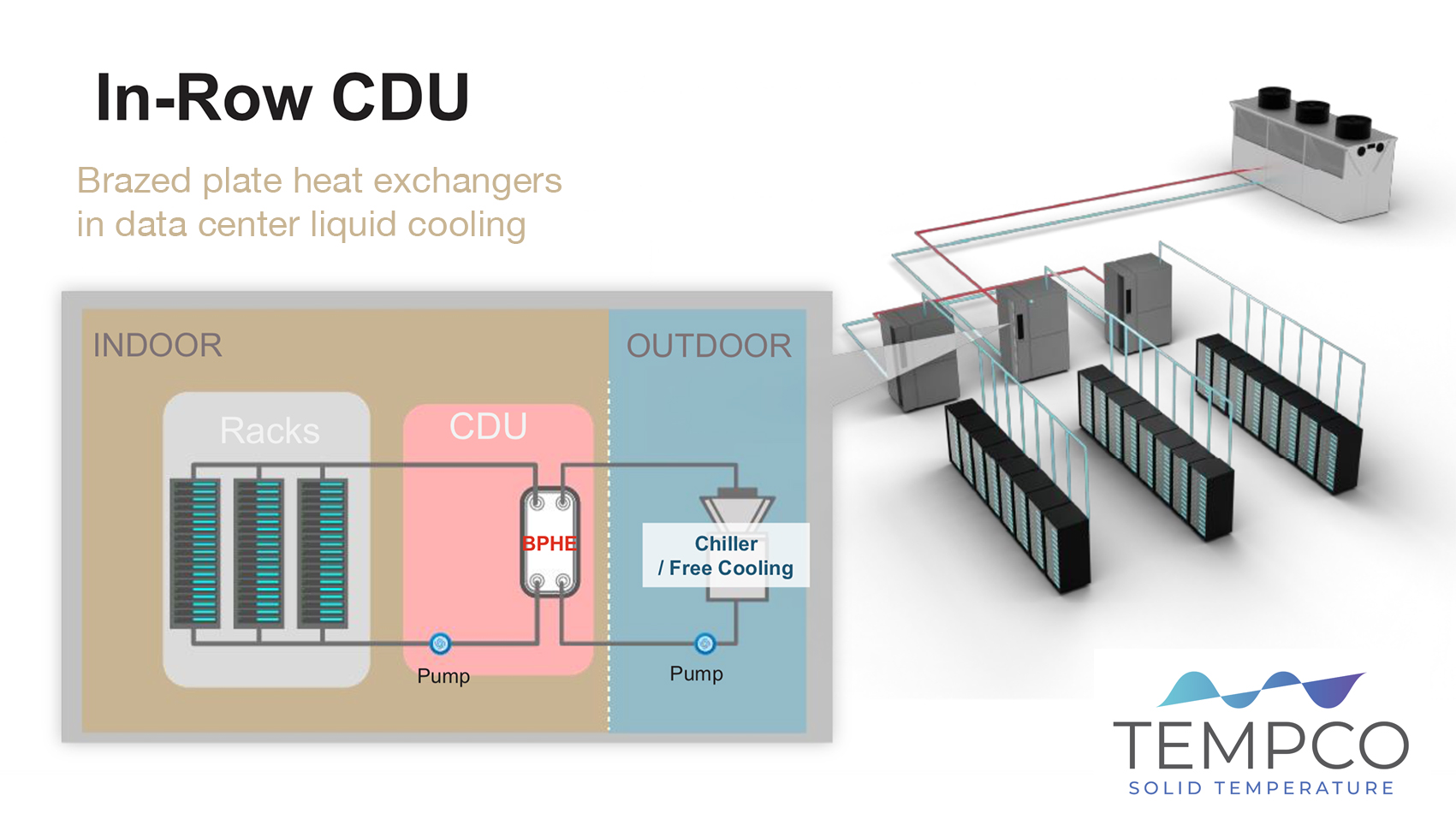
Tempco’s brazed plate exchangers are suitable for use in both cold plates and immersion cooling systems—the two main liquid cooling methods used in data centers. The product range covers a wide power spectrum, offering models from 5 to 200 kW for in-rack CDUs and units capable of handling 500 kW to 3 MW for stand-alone in-row CDUs.
Tempco’s range of brazed plate heat exchangers includes models designed for Direct-to-Chip (DTC) liquid cooling architectures that utilize cold plates. Cold plates technology employs conductive metal plates applied directly to high-power electronic components, such as GPUs and CPUs. The generated heat is absorbed by a coolant circulating through microchannel structures within the cold plates. In this liquid cooling system, the CDU acts as a hydraulic safety barrier: here, the overheated fluid arriving from the cold plates flows to the BPHE; once cooled, it is recirculated into the loop, remaining isolated from the external cooling water circuit (free cooler, chiller, and evaporative towers) and thereby protecting the IT equipment from potential contamination.
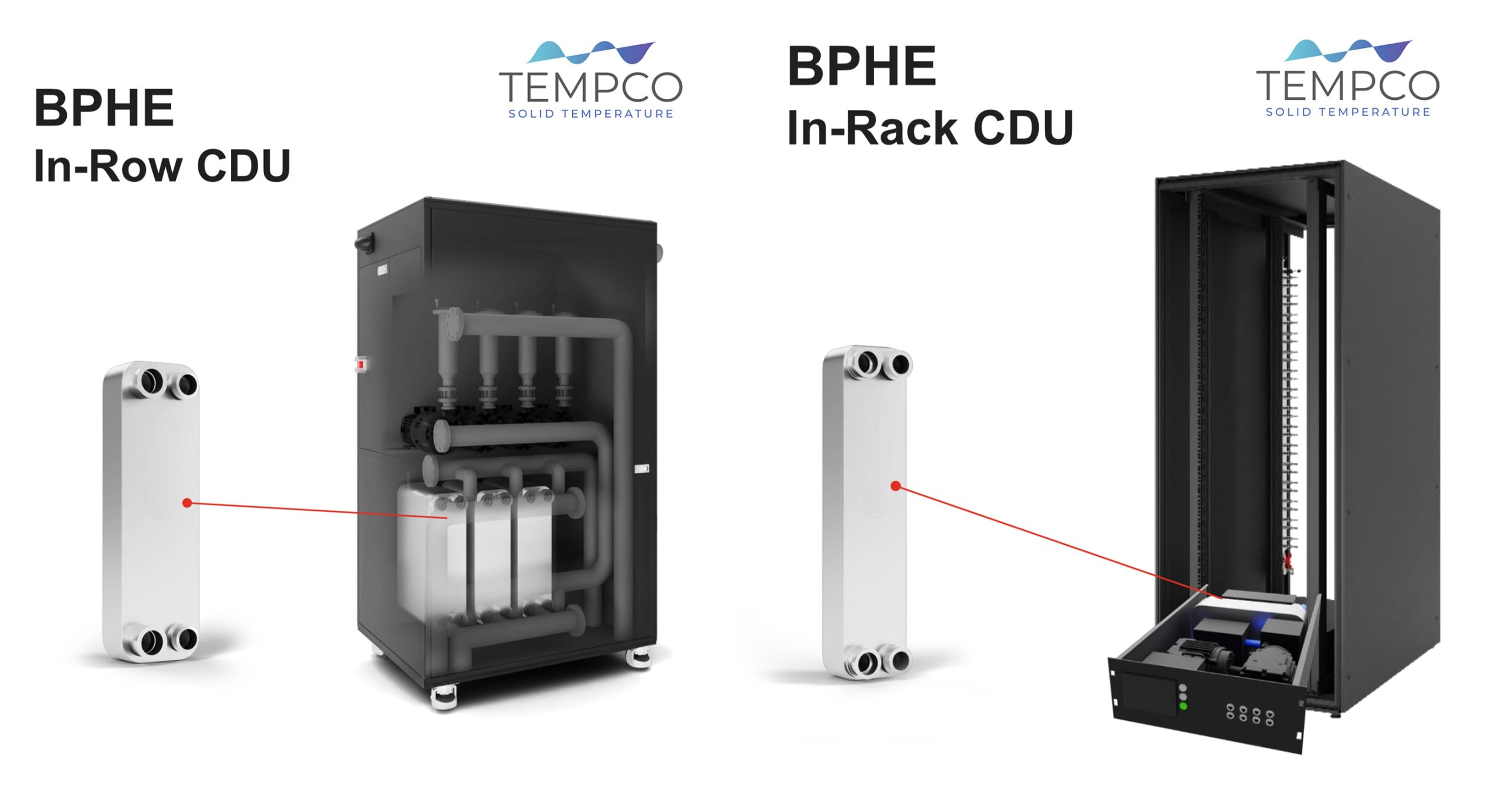
Tempco offers brazed plate heat exchangers for CDUs in liquid cooling solutions using cold plates for both “in-rack” architectures—where the exchangers’ compact size allows for easy CDU integration within server cabinets—and “in-row” setups, featuring standalone CDU cabinets separate from individual IT racks that can serve up to 10 servers simultaneously.
The product range also includes brazed plate heat exchangers (BPHEs) for immersion liquid cooling solutions. Unlike cold plates—which are applied directly to high-power chips and components, typically requiring hybrid solutions that rely on air cooling for other parts of the computing infrastructure—immersion liquid cooling involves submerging all hardware in dedicated tanks containing special dielectric fluids. This ensures uniform cooling across all components, thereby eliminating hot spots.
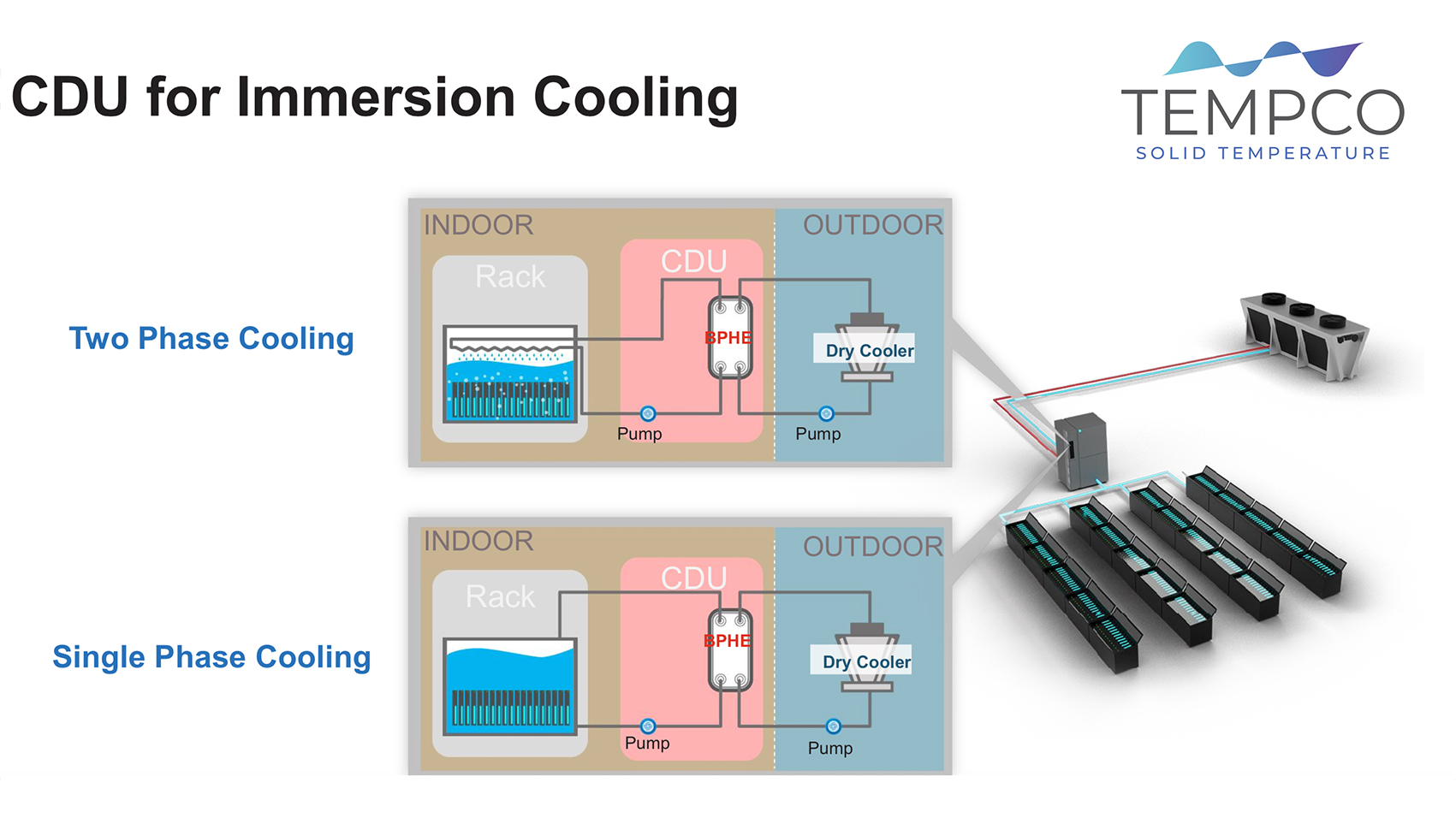
Finally, whether used with cold plates or immersion cooling,Tempco offers brazed plate exchangers optimized for single-phase liquid cooling systems, where the coolant (often a water-glycol mixture) remains in the liquid phase throughout the thermal cycle, as well as for two-phase cooling systems, where the coolant boils upon contact with the cold plate or the overheated servers. This two-phase approach offers superior cooling efficiency, making it ideal for high workloads and ultra-high-density racks; however, it requires a more complex cooling circuit to manage evaporation phases and ensure precise pressure and temperature control.