
Tempco has already successfully implemented several applications using TCOIL immersion heat exchangers to recover energy from industrial wastewater. Examples include a system designed for energy recovery from an equalization tank in rice production, as well as other applications that combine immersion heat exchangers with geothermal heat pumps—specifically, systems that harness renewable thermal energy from natural bodies of water such as lakes, rivers, harbor seawater, and canals.
Crucial to each of these applications are the precise sizing of the TCOIL units and the careful selection of materials, along with the incorporation of appropriate anti-fouling measures when dealing with contaminated wastewater.
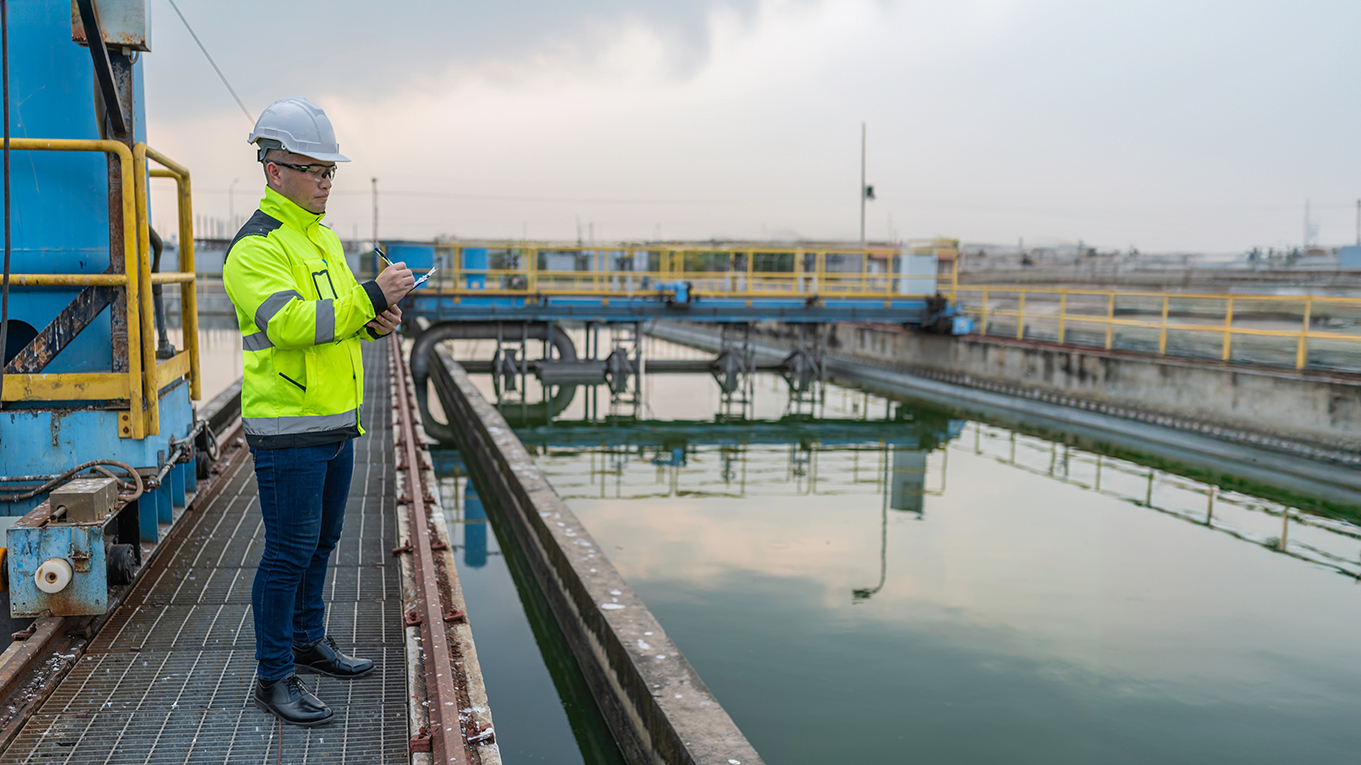
A recent thermal engineering design project involved us in the development of a TCOIL immersion heat exchanger for a denitrification tank in a wastewater treatment plant. The tank measured 40 x 13 m, with a usable depth of 2.5 m, a volume of approximately 1,300 m³, and an internal mixer. The treatment plant served as a heat source for a water-to-water heat pump system, utilizing an intermediate glycol circuit. The application’s thermal loads—approximately 110 kW extracted during the winter (with tank water temperatures at 9–10°C) and approximately 145 kW rejected during the summer (with tank temperatures at 25–26.6°C)—made the use of an immersion heat exchanger coupled with a heat-recovery heat pump an attractive solution. A 25% propylene glycol solution was used as the heat transfer fluid.
Specifically, the immersion heat exchanger was constructed using electropolished, double-embossed AISI 316L stainless steel plates. This design choice was essential to prevent fouling, given the presence of contaminated wastewater containing textile fibers and activated sludge. The heat exchanger consists of removable, parallel-arranged modules, featuring a frame designed without crossbars on the side facing the flow from the mixers.