
At the Baglietto shipyard, located in the Port of La Spezia, the first hydrogen refueling test from a dockside mobile vessel to a boat was successfully completed on April 1, 2026. The test confirmed the feasibility of low-pressure hydrogen transfer (30 bar) using an onboard storage system based on metal hydrides, which have proven to guarantee the intrinsic safety of this type of operation.
This is another important step towards the realization of Baglietto’s Bzero project, a true ‘promise made to the sea’ from the shipbuilder, aimed at implementing a green hydrogen production module on its yachts for zero-emission navigation. Using filtered and deionized seawater, Bzero will be able to produce hydrogen with a purity of grade 5.0 at a maximum pressure of 35 bar, using a system of AEM electrolyzers (for a total power of approximately 55 kW), powered mainly by energy from renewable sources.
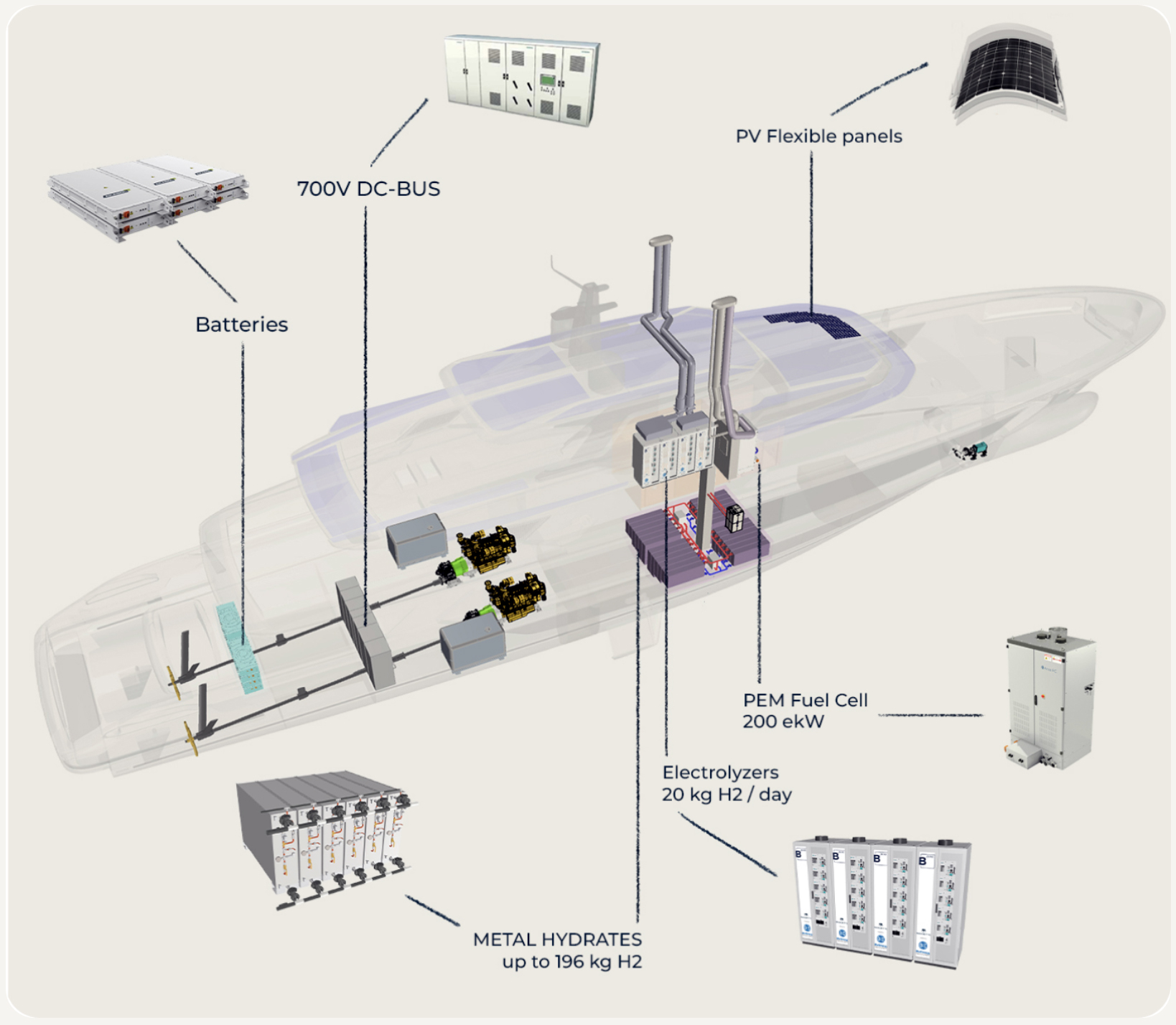
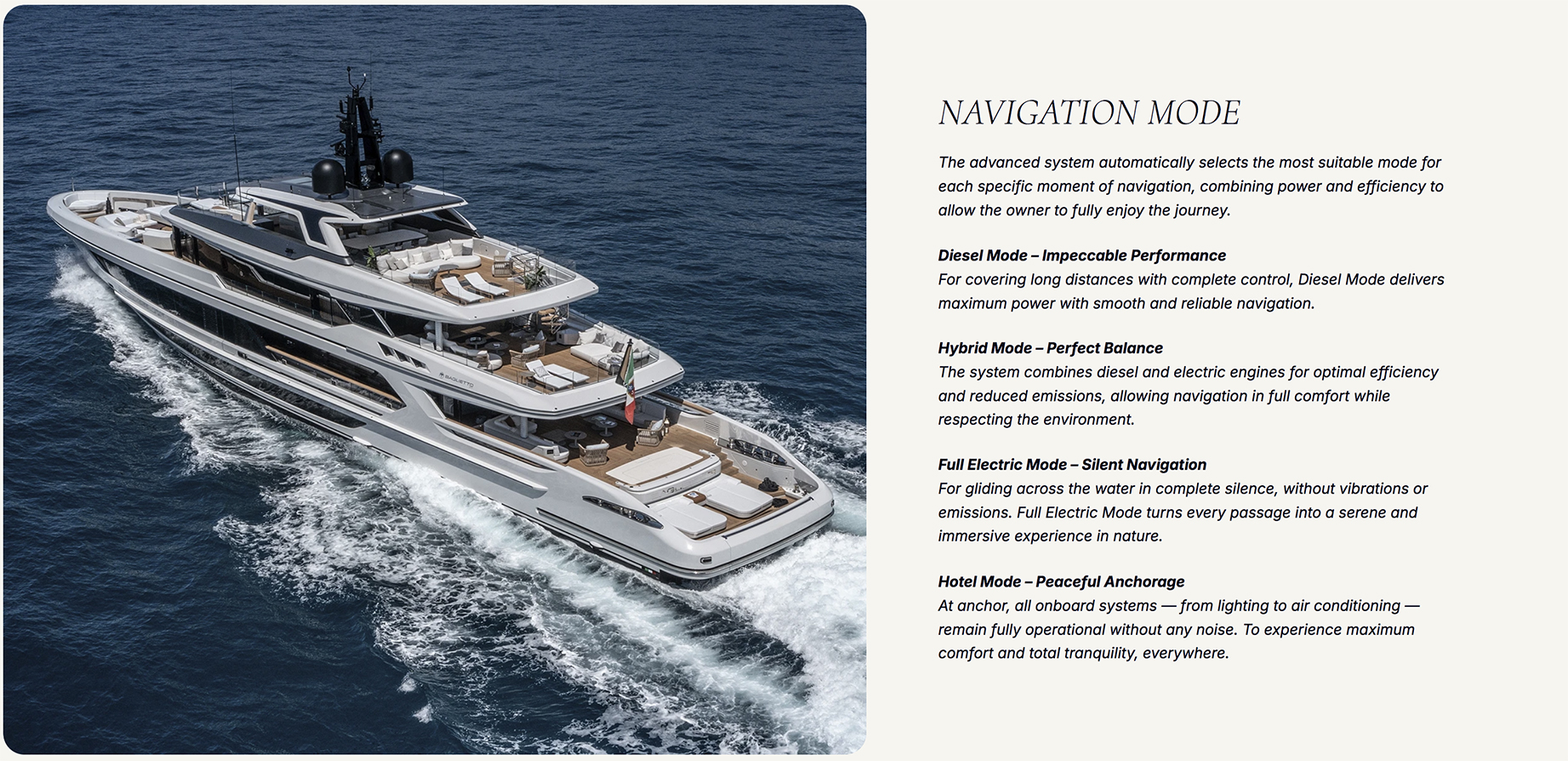
Baglietto’s zero-emission yacht for sustainable navigation uses photovoltaics to power electrolyzers, which produce green hydrogen directly from seawater. These in turn power an onboard PEM fuel cell system, enabling navigation in full-electric or hybrid mode. The propulsion system is automatically selected by the yacht’s advanced navigation systems to ensure the best balance between performance and efficiency. The cooling systems provided by Tempco, one of the partners in this important project, play a key role in the entire process: precise, constant, and reliable temperature regulation of all the yacht’s power electronics.
Going more in depth, as detailed by Baglietto itself, the hydrogen produced is stored in solid state, at low pressure and ambient temperature, inside metal hydrides tanks (MH storage). The hydrogen storage and release process is managed by a thermal management system that heats the metal hydrides during discharge and cools them during recharging. The required thermal energy is recovered from the heat generated by a PEM fuel cell module, with a capacity of approximately 185 kW, which uses hydrogen as fuel to produce zero-emission and zero-noise electricity. The generated power is regulated via a DC/DC converter on a 700 V DC central bus, a solution already tested on Baglietto yachts equipped with hybrid technology. Connected in parallel to the fuel cell on the same bus is a set of lithium-ion batteries designed to absorb peaks and sudden variations in user energy demand.
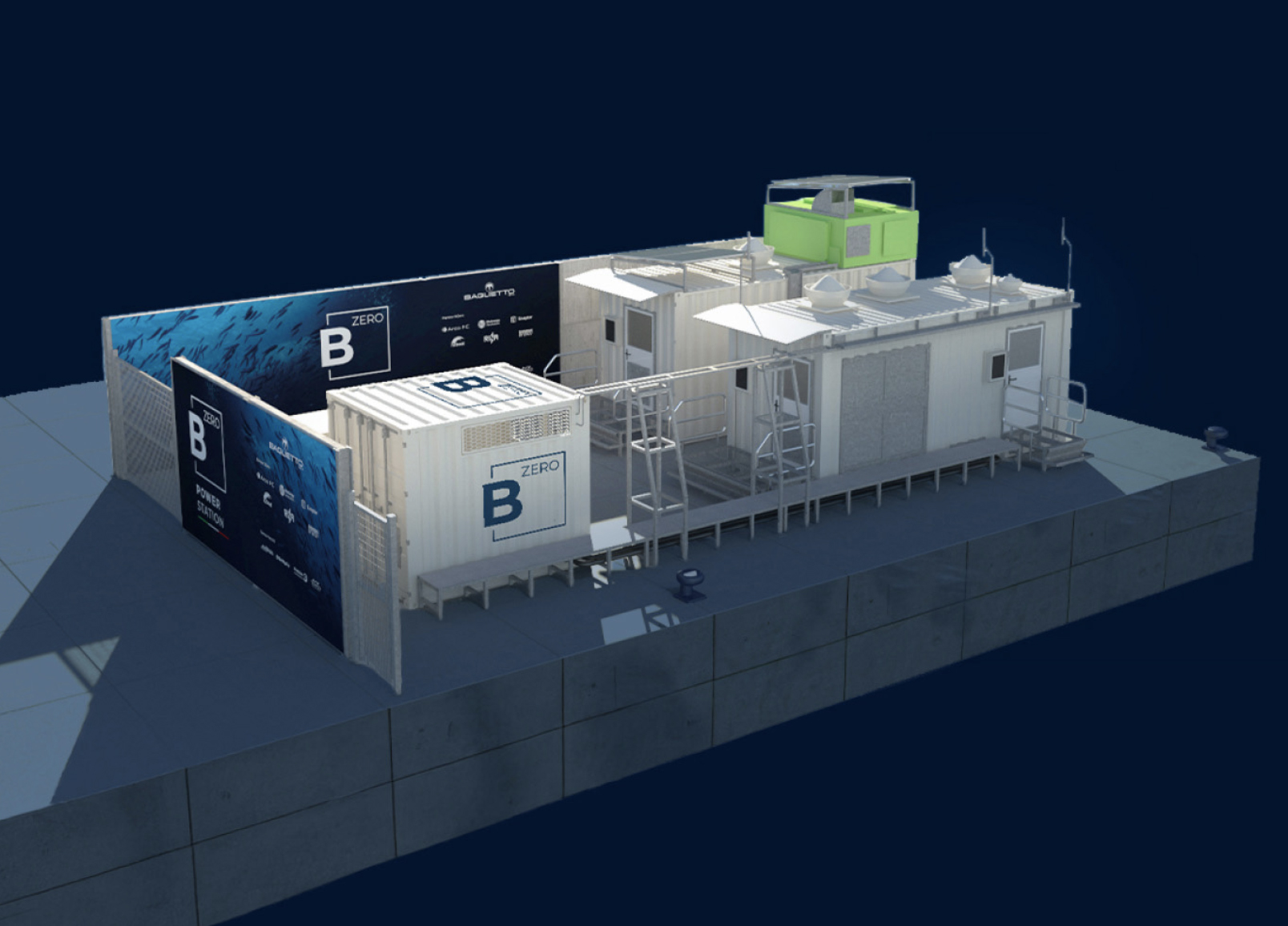
The operations conducted on the prototype created in port are aimed at optimizing the technical aspects to obtain the necessary RINA certifications for hydrogen tank refueling operations and speeding up the procedure, while also ensuring the highest levels of process safety.