
Temperature control applications involving plate heat exchangers in seawater and low-temperature environments present a technical challenge frequently recurrent, primarily regarding the choice of materials—specifically, the use of either titanium or duplex steel is mandatory.
For projects where a plate heat exchanger will come into contact with seawater, with flanged connections, both the plates and the connections must be made of titanium or duplex steel. The unit’s frame (body) is typically constructed from carbon steel, fitted with EPDM gaskets, to withstand operating conditions characterized by high corrosivity and low temperatures, reaching as low as -40 °C.
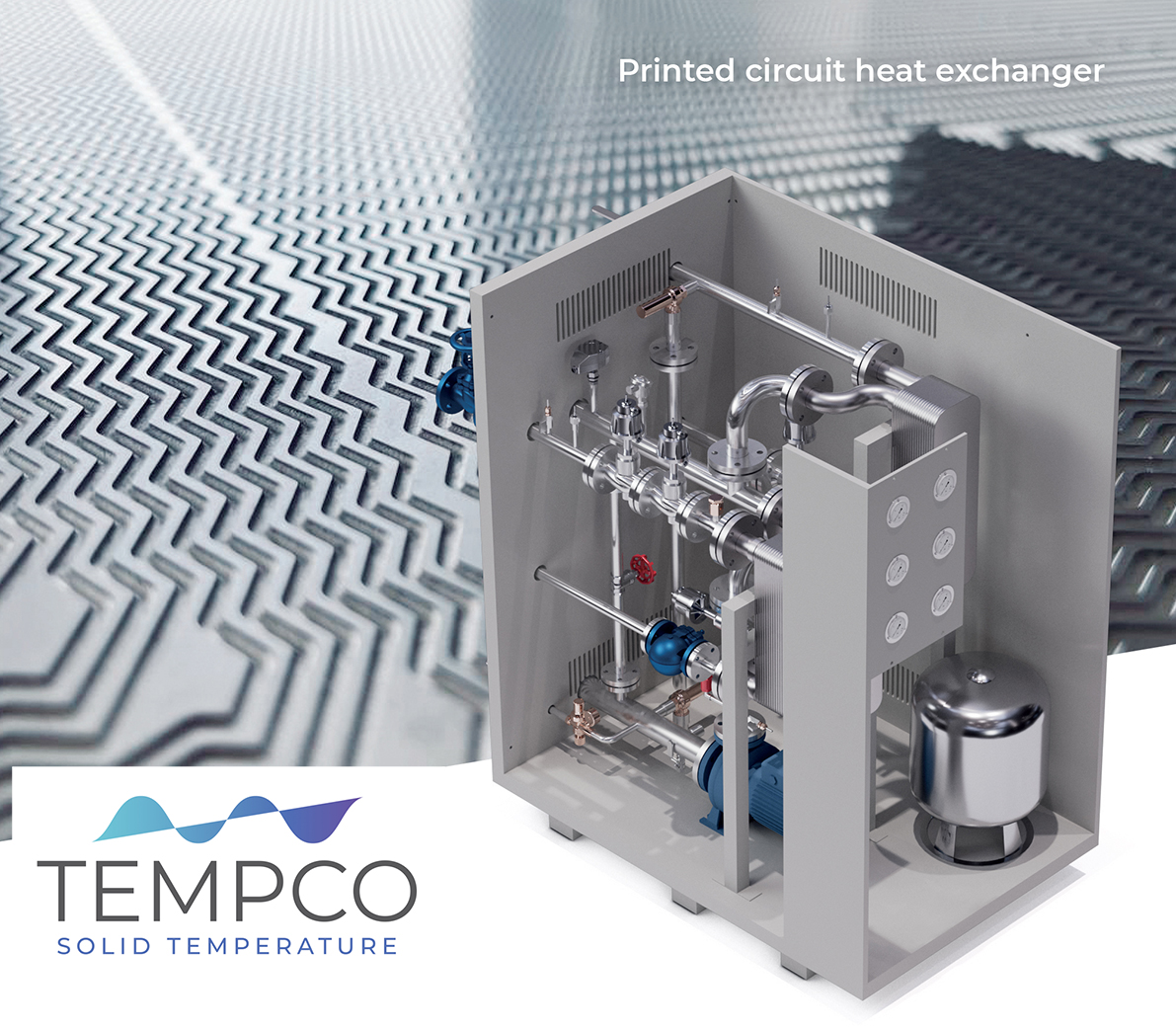
Furthermore, selecting the appropriate plate heat exchanger for low-temperature conditions necessitates a dedicated mechanical calculation. Low temperatures alter the required pressure class and the necessary material thickness. For such operating conditions, printed circuit heat exchangers (PCHE) represent an compelling solution, as they offer exceptional mechanical and structural strength. Their construction process—utilizing diffusion bonding (solid-state welding)—ensures excellent structural integrity for the plate pack, making PCHE units highly suitable for demanding applications, such as gas compression or subsea environments.